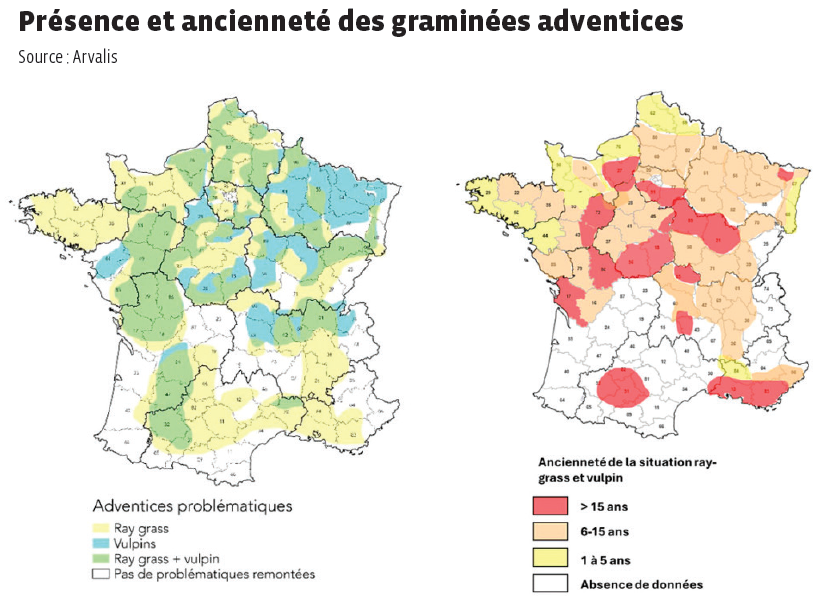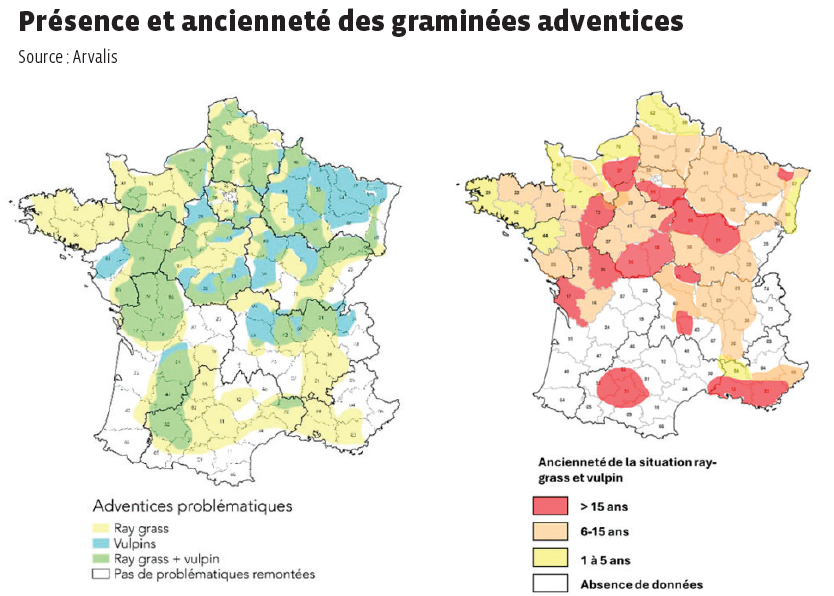


La présence des mauvaises herbes dans les parcelles est liée à un certain nombre de facteurs écologiques et agronomiques. Mais il existe très peu d'espèces fortement indicatrices permettant un diagnostic agronomique fiable.
Grâce à une base de données constituée autour de dossiers d'homologation d'herbicides, la démarche entreprise a été de tester la valeur indicatrice (même partielle) apportée par les espèces adventices les plus communes. ? partir de plusieurs espèces très fréquentes, peu informatives prises individuellement, l'information globale qu'elles fournissent a été analysée.
D'après les premiers résultats obtenus, l'opportunité d'utiliser les mauvaises herbes comme marqueurs des changements de pratiques au sein des zones de grande culture est discutée. The presence of a given weed species in a field is the result of the convergence of several ecological and agronomic factors. Only for a few species is the relationship to the environmental characteristics strong enough for its presence to be used as an indicator of particular agronomic conditions. Observations from control plots from herbicide registration trials were used to compile a weed data base. The data base was then used to test and evaluate the relevance (even partial) of the most common weeds as agronomic indicators. When evaluated at the individual species level the data was not very informative. Therefore, the cumulative information obtained when taking several species into account was analysed. In this initial attempt, the opportunity to use weed communities as indicators of the changes resulting from agricultural practices are discussed.