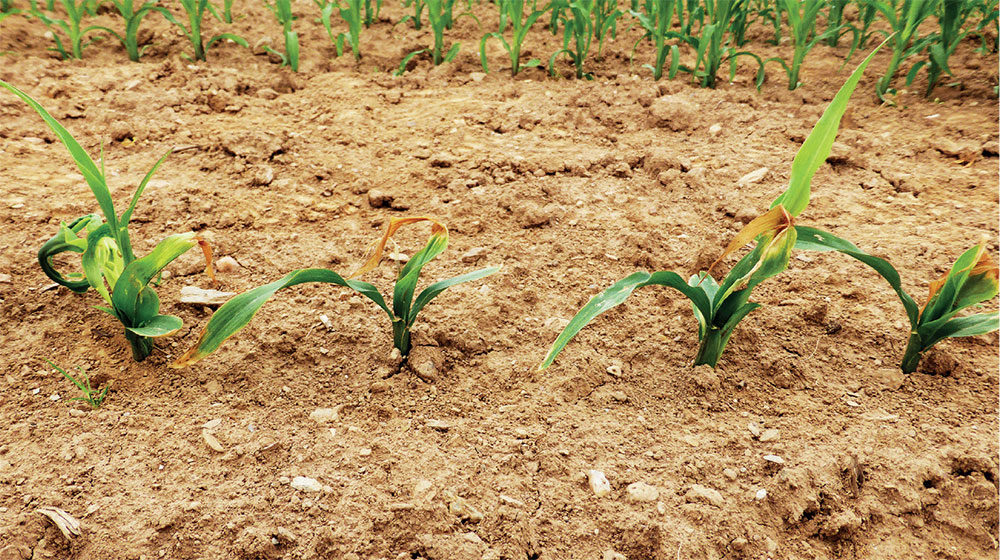


La campagne maïs 2002 a été plutôt calme sur le plan phytosanitaire jusqu'à septembre, pour se gâter avec les pluies d'automne et les mauvaises conditions de récolte. Au final, le rendement moyen est estimé à 91 q/ha. Bon mais décevant car on attendait un record.
Les désherbages de prélevée ont été sans problème, le tout-en-post a pu être plus délicat (traitements tardifs sur adventices développées, doses trop réduites, levées tardives, etc.) Il y a quelques évolutions de flore.
Côté insectes, la pyrale a été moyenne (un peu plus forte au nord, un peu plus faible au sud qu'en 2001), la sésamie, freinée par le froid de fin 2001, plus discrète que l'année précédente et les insectes du sol habituels discrets sauf par endroits.
Les maladies transmises par les semences sont calmes. Parmi celles du feuillage, à noter la rouille en Aquitaine (nuisibilité discutable) et l'helminthosporiose en Alsace (nuisible par endroits).
Les mauvaises conditions de fin de campagne ont entraîné des risques de fusarioses pour les maïs récoltés après la mi-octobre (grains surtout).
Enfin, deux événements de 2002 n'ont pas eu de conséquences immédiates. La fin de l'atrazine était programmée, ses effets sont à venir et l'après-atrazine est préparé. L'introduction accidentelle de Diabrotica virgifera était surveillée : si l'éradication des deux foyers détectés réussit, il n'y aura pas d'effets les prochaines années. The 2002 corn season was fairly calm in terms of plant health, up until September, when autumn rains arrived, resulting in poor harvesting conditions. In the end, the average yield was 91 q/ha. Good, but disappointing at the same time, since it was expected that records would be broken this season.
Pre-emergence weed control was carried out with no problems reported, but post-emergence proved to be more delicate (delayed treatments on developed weeds, doses too low, late emergence, etc.). There were some cases of floral development. Turning to insects, corn borer was fairly average (a little stronger in the north and weaker in the south than in 2001), sesamia was hindered by the cold conditions at the end of 2001, and therefore caused less damage than in the previous year. Soil insects were also fairly discreet, except for certain isolated cases.
Diseases transmitted by seeds also kept a generally low profile. Leaf diseases included rust in Aquitaine (with varying degrees of damage) and leaf blight in Alsace (harmful in certain areas). The poor conditions at the end of the season led to the risk of snow mould on corn harvested after mid-October, especially on the grains themselves.
Finally, the consequences of two events occurring in 2002, are not yet known. The phasing out of atrazin had been programmed and the effects will be measured in the future : the post-atrazin period has been prepared. The accidental introduction of Diabrotica virgifera was kept under close surveillance: if the eradication of the two sources is successful, there will not be any long-term effects in the years to come.