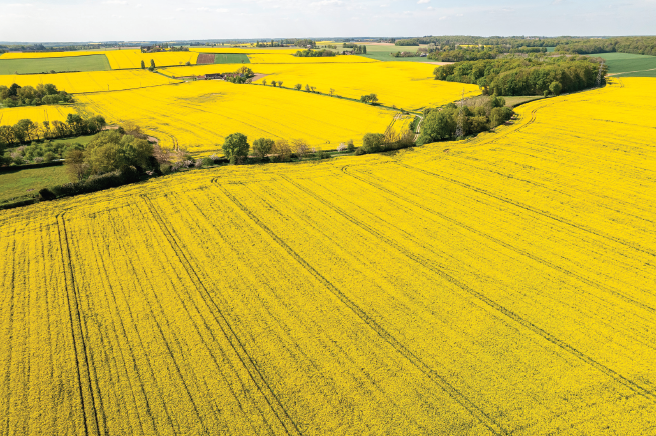


Les oléoprotéagineux récoltés en France métropolitaine en 1998 n'ont pas été confrontés à des problèmes phytosanitaires très graves ni très nouveaux.
Sur colza, l'Oïdium, présent dès l'automne 1997, a attaqué au printemps 1998. Sa nuisibilité varie dans les essais de 2 à 12 q/ha, mais les fongicides ont permis de le maîtriser.
Le Phoma et le Sclérotinia restent discrets. Les ravageurs les plus marquants sont les Pucerons verts (à l'automne) et cendrés (au printemps au sud de la Loire). On signale quelques ravageurs occasionnels et l'extension du Baris. Côté adventices, à noter les crucifères, géraniums, ombellifères et l'Orobanche.
Sur tournesol, le Mildiou, stationnaire (présence des races 1, A et B, attaques précoces sur semis d'avril, quelques attaques tardives), reste à surveiller et la recherche de variétés résistantes d'actualité. Le Phoma attaque tard avec une nuisibilité pouvant atteindre 15 % du rendement. Le Sclérotinia et le Phomopsis restent discrets. Des Pucerons attaquent des plantes issues de semences non traitées contre eux. Les adventices notables sont, selon les régions, l'Ambroisie, l'Ammi élevé et le Xanthium.
Sur soja, on note les attaques de Rhizoctone et de Diaporthe ainsi que celles des Punaises vertes difficiles à détecter et combattre. Les adventices sont difficiles à maîtriser dans cette culture, qu'elles soient classiques ou plus nouvelles.
A calm year, with just a few slight hiccups
There were no reports of serious damage to French oil and protein seed crops in 1998.
On rapeseed crops, powdery mildew, which appeared in the autumn of 1997, attacked in the spring of 1998. The results of tests fixed damage levels at between 2 and 12 q/ha, but outbreaks were well controlled by herbicides. Phoma and Sclerotinia kept a low profile. The most noteworthy pests were aphids, with attacks in the autumn, and south of the Loire in the spring. There were a few isolated reports of other pest damage. The spread of Baris was also confirmed. As far as weeds are concerned, cruciferous and umbelliferous growths were reported as well as cranesbill and orobanches.
Turning to sunflower crops, mildew, although static (races 1, A and B, with early seed attack in April, and a number of late attacks), should continue to be monitored. The search for resistant varieties is still on the agenda. Phoma attacks late and can cause damage levels up to 15 % of the yield, but on the whole, as for rapeseed crops, Phoma and Sclerotinia kept a low profile. Plants whose seeds were not treated against aphids left themselves open to attack. On the weed front, depending on the region, there were reports of ragweed, bullwort and xanthium.
On soya crops, outbreaks of Rhizoctonia, Diaporthe and bugs were difficult to detect and to control. As always, there were difficulties with the control of weeds, both traditional and new, on this particular crop.