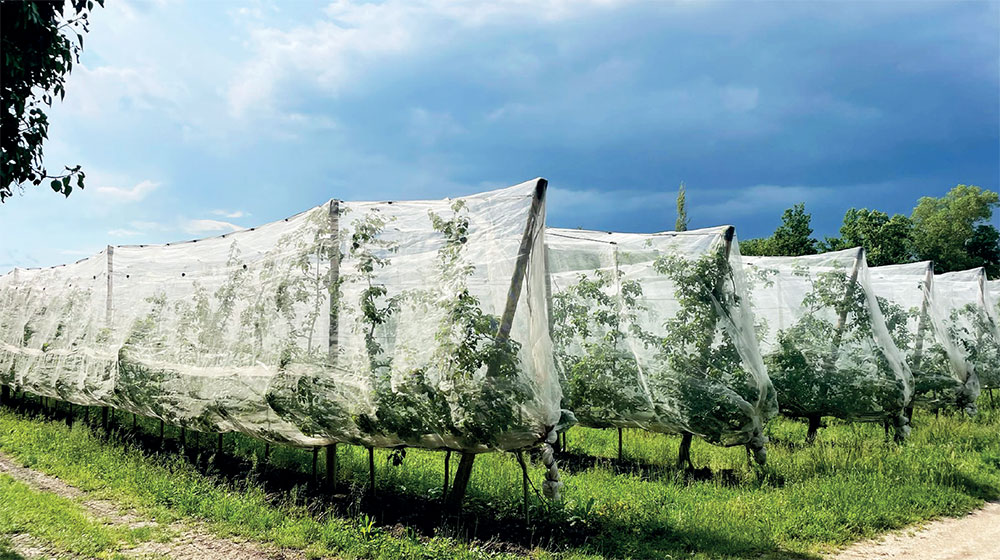


? l'occasion des journées portes-ouvertes organisées en septembre 1998 par la Chambre d'Agriculture et le Groupement des agriculteurs biologiques et bio-dynamistes du Maine-et-Loire, Phytoma-LdV a visité les exploitations d'un arboriculteur et d'un viticulteur.
Tous deux entretiennent leurs sols par enherbement d'une partie (couvert broyé ou tondu deux ou trois fois par an), entretien mécanique du reste et fertilisation organique. Cela exige plus de main-d'oeuvre, donc de coût, qu'un entretien chimique.
La protection contre les insectes et maladies utilise des produits autorisés en agriculture biologique : bouillie bordelaise, soufre et Bacillus thuringiensis avec usage de pièges à phéromones pour les deux, et Carpovirusine sur pommier. L'arboriculteur réalise manuellement l'éclaircissage, la destruction des chancres et des rameaux à pucerons.
Cette protection est plus onéreuse qu'en agriculture conventionnelle chez l'arboriculteur qui vend ses pommes plus cher, et moins chez le viticulteur qui vend son vin au même prix.
Certains problèmes sont plus graves qu'en agriculture conventionnelle (Tavelure sur pommier), d'autres moins (Acariens sur pommier et vigne), d'autres autant (Esca sur vigne).
A number of open days were organised in September 1998 by the Chamber of Agriculture and the Association of Organic and Biodynamic Farmers of Maine-et-Loire. Phytoma-LdV took the opportunity to visit an orchard farmer and a wine producer.
Both of these farmers manage the quality of their soil by sodding (covered comminuting or close-cropping two or three times a year) and mechanical soil maintenance. Organic fertiliser is used. These methods require more manpower and are therefore more expensive than chemical soil management.
Protection against pests and disease is carried out using products authorised in organic farming : Bordeaux mixture and Bacillus thuringiensis in association with pheromone captors, and Carpovirusine for apple trees. The orchard farmer deals manually with such tasks as roguing and the removal and destruction of canker and aphid branches.
This form of protection comes out more expensive for the orchard farmer, who is obliged to sell his apples at a higher price. For the vine grower, organic protection works out to be less expensive and he is able to sell his wine at the normal market price. Certain problems can be more difficult to deal with than in conventional farming (e.g. apple scab), others less difficult (e.g. apple and vine mites) and others just the same (e.g. grapevine Esca).