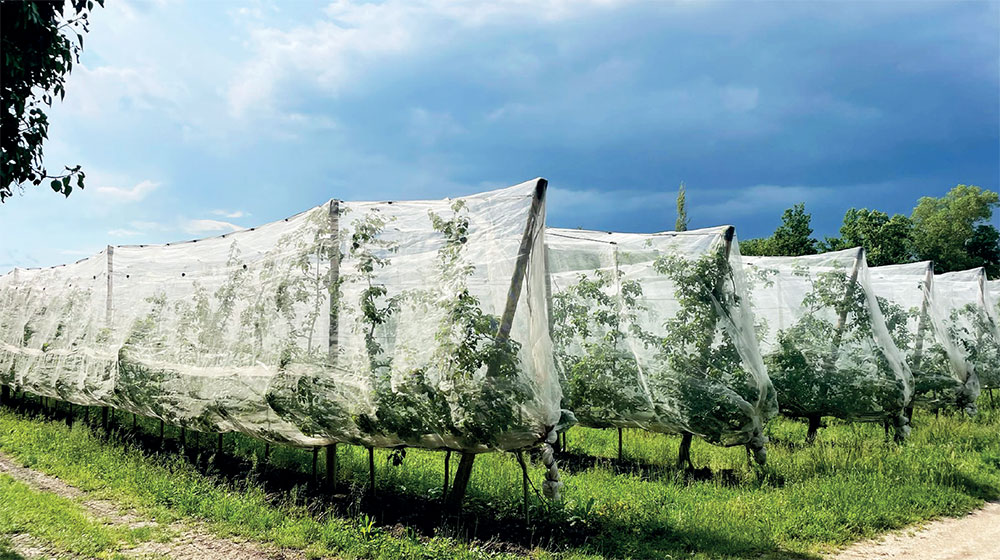


La structure et l'abondance de différentes communautés biologiques sont analysées dans des vergers de pommiers de la région d'Avignon et de Valence sous diverses stratégies de protection : agriculture biologique (AB) sans intrant chimique de synthèse, cahier des charges Production Fruitière Intégrée avec lutte chimique conventionnelle ou en confusion sexuelle contre le carpocapse des pommes.
L'abondance des lombrics, l'abondance et la richesse spécifique totale des arthro-podes auxiliaires et phytophages dans les vergers et leurs haies sont plus élevées en AB que dans les autres modalités. Mais les réponses aux systèmes de protection diffèrent fortement d'un groupe d'insectes à l'autre. L'abondance des hyménoptères parasitoïdes est la moins élevée dans les vergers en AB, qui connaissent par ailleurs des pullulations d'acariens si les appli-cations de soufre contre la tavelure se multiplient. ? l'inverse les prédateurs généralistes sont plus fortement affectés dans la modalité « conventionnel ».
L'abondance et la diversité des oiseaux sont trois fois plus élevées en AB qu'en protection chimique, la confusion sexuelle étant intermédiaire. Ce rapport s'accentue si on ne considère que les oiseaux insectivores, pour lesquels les vergers semblent constituer un habitat aussi favorable que les milieux naturels non perturbés si la pression insecticide est allégée. This article analyses the structure and abundance of several biological communities in apple orchards around the towns of Avignon and Valence in southern France, using different protection strategies: organic farming, integrated fruit production guidelines with chemical protection, or with mating disruption against codling moth.
The abundance of earthworms, the abundance and total specific resource of beneficial and plant-eating arthropods in orchards and surrounding hedgerows is higher in organic farming than in other cases. Results differ however between different groups of insects. The abundance of hymenopterous parasitoids is the lowest in organic orchards which see higher irruptions of mite populations as applications of sulphur to control scab are increased. On the other hand, general predators are more strongly affected when conventional practices are used.
The abundance and diversity of birds are three times higher in organic than in conventional farming (with intermediate values in mating disruption orchards). This ratio is further accentuated if we consider insect-eating birds, for whom orchards constitute a highly acceptable natural habitat so long as the use of insecticides is maintained at a low level.