

Avec un retour à la normale climatique, 2004 a été plus favorable que 2003 aux cultures de printemps et moins à leurs ennemis.
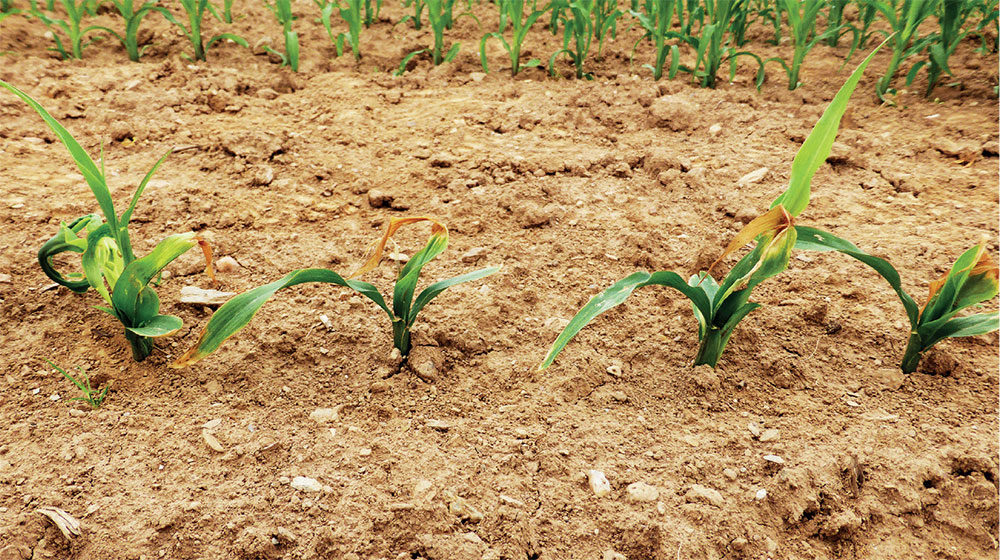
Côté maïs, les ravageurs du sol (taupins, etc.) ont été nuisibles sur semis précoces souffrant de froid et d'humidité à la levée : ceci révèle une tendance de fond (peut-être liée à la disparition du lindane) inquiétante pour 2005 avec la suspension des traitements de semences insecticides. Helicoverpa armigera est suivie sur maïs doux et semences ; on note des dégâts de corbeaux. La flore évolue après la fin de l'atrazine, compliquant le désherbage. Sur tournesol on note la présence ponctuelle de races de mildiou contournant les résistances variétales (mais encore sensibles au méfénoxam) ; les taupins ont attaqué les semis précoces ; l'ambroisie reste un gros problème ; de nouvelles adventices se développent. Côté soja, on note des dégâts de punaise verte et de pyrale du haricot Etiella zinckenella, et des adventices nouvelles, dont l'ambroisie. With a return to normal climatic conditions, 2004 was a better year for spring crops than 2003, and also a less good year for pests and diseases affecting these crops.
On corn crops, soil pests (e.g. wireworms) caused damage where early sowing had taken place: this phenomenon reveals an underlying trend (possibly linked to the withdrawal of lindane) which gives rise to concern for 2005 owing to the suspension of seed treatments in France. There were also reports of damage caused by crows. Floral development has also increased following the withdrawal of atrazin. Turning to sunflower crops, certain strains of mildew succeeded in by-passing varietal resistance; as for corn, wireworm caused damage on early sown crops; Ambrosia ragweed continues to pose a problem in terms of weed control, and new adventitious weeds are developing. As far as soy crops are concerned the main pests of concern were green capsid bugs and Lima bean pod borer Etiella zinckenella. Several weeds, especially Ambrosia ragweed, presented problems.